

Quick Answer: The best place to put a kitchen microwave depends entirely on your layout goals, but modern kitchen design favors shifting the appliance away from the traditional over-the-range setup to maximize cooktop ventilation and aesthetics. The top choice for open-concept floor plans is a below-the-counter microwave drawer integrated into a base cabinet or island, which offers superior universal accessibility and keeps countertops completely clear. For smaller spaces where square footage is at a premium, integrating a built-in microwave into upper cabinetry at eye level or utilizing an open undermount shelf preserves valuable workspace while ensuring safe clearances and proper handle swing operation.
Choosing the perfect layout for a kitchen renovation involves a balance of aesthetics and daily function. While we often spend hours selecting cabinet finishes, quartz countertops, and backsplashes, one humble appliance consistently disrupts the visual and functional flow of a space: the microwave.
For decades, builder-grade floor plans defaulted to a single standard layout. However, modern design priorities have shifted dramatically. Homeowners now demand cleaner lines, open views, and highly personalized workspaces. Consequently, deciding where your microwave should live is no longer a simple afterthought. It is a critical design decision.
If you walk into almost any unrenovated kitchen across the Bradenton or Sarasota area, you will likely see the microwave mounted directly over the stove. This placement has been the dominant trend for a few decades. While some homeowners still prefer to keep it located there, a noticeable number of people now view it as an eyesore and an inconvenience.
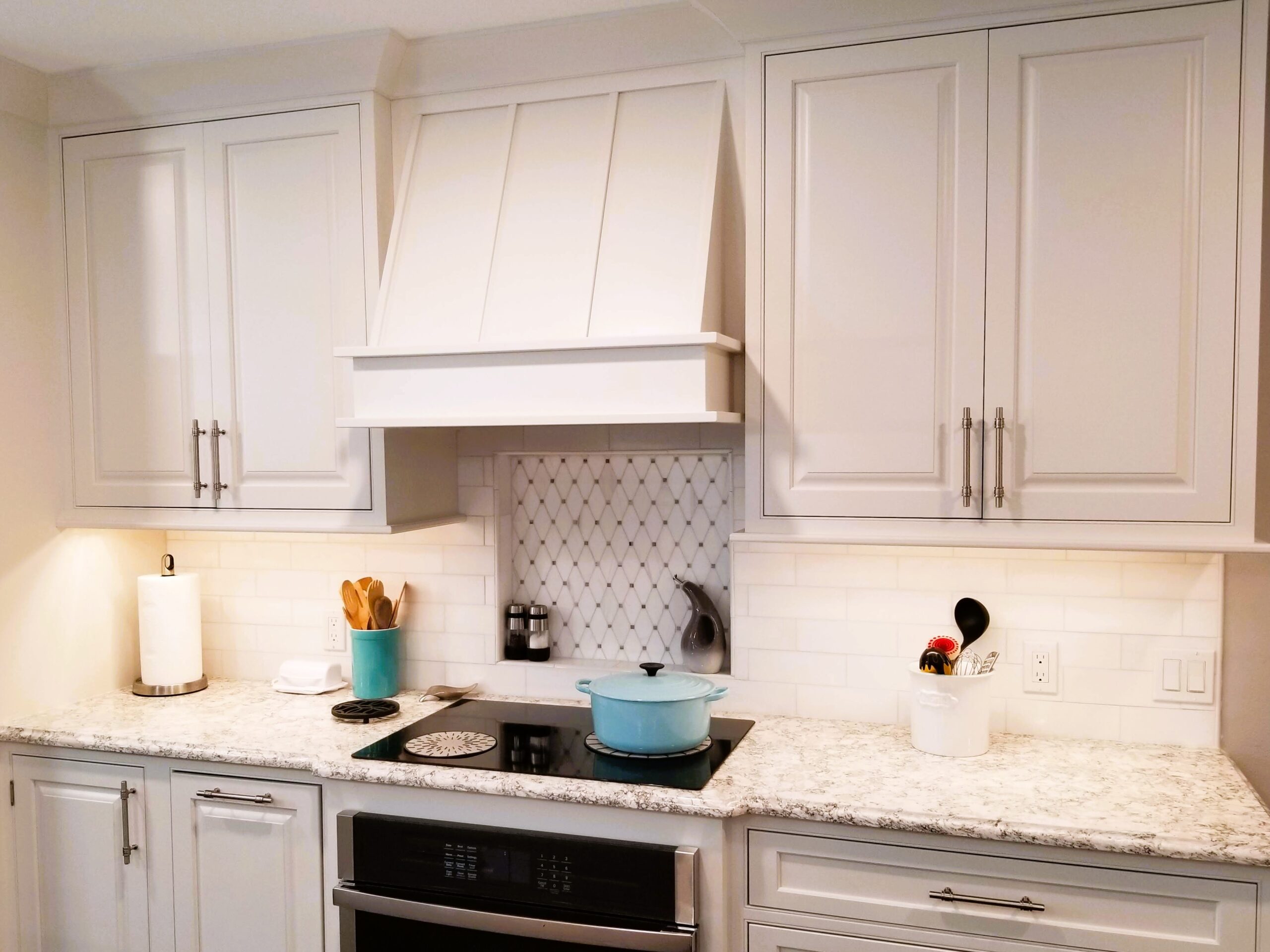
From a purely aesthetic standpoint, placing a microwave above the range eliminates the possibility of turning the cooking zone into a natural visual anchor. Beautiful custom wood ventilation hoods and striking tile backsplashes require breathing room. A bulky, plastic-faced appliance directly over the cooktop smothers that design potential.
Additionally, our love for open-concept living and dining areas has created a secondary challenge. Eliminating walls creates bright, airy living spaces, but it also causes a severe shortage of upper wall cabinet space. Because designers have fewer walls to hang cabinets on, traditional eye-level microwave boxes are quickly disappearing in favor of highly integrated, hidden, or below-the-counter solutions.
Every family interacts with their kitchen differently, meaning there is no one-size-fits-all solution. Evaluating the pros and cons of the three primary placement zones will help you find the right fit for your home.
When wall space is limited, shifting the microwave below the counter into a base cabinet or a central island is an exceptional alternative. Personally, we highly prefer this option if a shoulder-height, built-in option is not possible.
A built-in option or integrating a microwave into your upper cabinetry keeps the appliance at a highly functional height for the average adult.
The easiest, most traditional freestanding approach.
To see the dramatic impact of moving a microwave out of the main cooking workflow, look no further than our modern kitchen remodel portfolios.
In this Palmetto project, the original kitchen was notably small, dark, and cramped. As you can see in the “before” image, the microwave sat awkwardly on an open shelf directly next to the range. This setup was not only unsightly, but it also consumed a massive portion of the upper cabinet storage space. The appliance blocked natural light, eliminated counter space right next to the burner, and created a traffic jam whenever multiple cooks tried to work simultaneously.
Our new design completely transformed the home by opening up the layout and eliminating the restrictive walls. To maximize storage and efficiency in the main cooking area, we relocated the microwave entirely. We utilized the former breakfast nook to build out a comprehensive pantry space, a dedicated coffee bar, and custom cabinetry under the bay window. By placing a sleek microwave drawer into this secondary beverage zone, the main cooking area gained valuable counter space, better work flow, and a vastly improved traffic pattern.
When tackling a layout redesign, understanding the mechanical and spatial constraints of your appliances is vital to passing code inspections and avoiding costly daily headaches.
First and foremost, you must consider the door mechanics. Virtually any standard microwave with a hinged door only hinges from the left side. While you can occasionally source built-in options featuring an oven-style dropdown door, the vast majority swing open to the left. Consequently, if you intend to place a standard microwave on the far right end of a cabinet run, it will immediately become inconvenient to use.
Second, if you place that left-hinged unit next to an object that is deeper on its left side, such as a pantry cabinet or a refrigerator, the handle clearance becomes a major issue. The microwave door must be able to open to a full 90 degrees (or more) so you can easily place and remove wide dinner plates or cooking vessels.
Sometimes, space constraints force your hand. We recently developed a design plan for a potential client living in a very small condo of less than 600 square feet. A restrictive budget required the range to remain pushed directly up against the left wall.
When square footage is at an absolute premium, placing the microwave above the range can occasionally be the lesser of two evils to maximize cabinetry storage space, which was this client’s absolute priority. To make this challenging layout function safely, the homeowner is actively sourcing an over-the-range microwave featuring a zero-protrusion handle to allow the left-hinged door to open properly against the wall.
The alternative would require spending significantly more money on structural and/or mechanical adjustments while simultaneously losing functional storage. We would have to place a small 9-inch or 12-inch cabinet between the range and the left wall just to give a standard microwave door room to swing open. That shift would split her one large, highly usable cabinet to the right of the range into two smaller, less functional sections.
Another frequent installation oversight happens during simple appliance upgrades. When a homeowner attempts to replace an old, slimline ventilation hood with a modern over-the-range microwave, they rarely factor in the height to the upper cabinet.
The top mounting height, meaning the bottom of the cabinet box above the stove, is generally about three inches too low for a microwave compared to a standard hood. If you mount a microwave to that existing cabinet without modifying it, the unit will sit incredibly low over the cooktop. Ultimately, this mistake leaves so little vertical clearance that utilizing your back stove burners for tall pots becomes incredibly frustrating and dangerous. Always consult the appliance manufacturer’s specifications or at least the National Kitchen and Bath Association (NKBA) guidelines to ensure your vertical clearances meet strict safety benchmarks.
Finally, pay close attention to water sources. While having a microwave near a sink is convenient for prepping wet foods, proximity rules apply. Always verify local electrical codes regarding GFCI outlet requirements and safe distances to completely eliminate splashing and shock hazards.
If your kitchen footprint is small and an over-the-range setup is off the table, you can still reclaim your countertops with a few strategic custom kitchen cabinetry solutions.
Ultimately, there is no singular, correct spot to place a microwave. The perfect location depends entirely on designing a kitchen that truly works for you by assessing your floor plan layout, your storage goals, and how your family navigates the space. Navigating door clearances, structural limitations, and ventilation codes can be tricky, but you do not have to guess.
If you are ready to elevate your home with a layout that perfectly balances striking style with effortless, everyday utility, the design team at Duncan’s Creative Kitchens is here to guide you. Contact us today to discuss your next renovation project!