
Why Do Homeowners Decide It's Time to Remodel Their Kitchen?
There isn’t a single, right reason to remodel. Sometimes it’s obvious. The cabinets are worn out, the countertops have seen better days, or the appliances are nearing the end of their life.
Sometimes the reason is more personal. I’ve worked with clients who owned a condo for years as a vacation getaway. The kitchen worked just fine because they were only there a week or two at a time. Then retirement came along, and suddenly they were spending the season instead of days. The kitchen that worked perfectly for vacations no longer worked for everyday life. The kitchen hadn’t changed. Their lives had.
To begin the conversation about your kitchen, I generally ask two basic questions, and neither involves cabinets, appliance selections or finishes. It’s simply:
- What do you love about your kitchen?
- What do you hate about your kitchen?
Those answers tell me a lot about where we should go next.
Our first goal isn’t to start choosing products, it’s to understand what you’re trying to accomplish before deciding how to do it. Every successful kitchen remodel begins there.
If you love the amount of natural light, we should probably protect that. If you hate how everyone walks through the middle of the kitchen while you’re trying to cook, we’ve identified a problem in need of a solution.
Once we understand those things, the next step becomes much easier. I have found that solutions fall into one of three broad types of kitchen remodeling project: a simple refresh; swapping out the kitchen cabinets to replace them as they are; or an overall redesign of the space.

How Much Does My Kitchen Really Need to Change?
After we’ve identified what you love and what you hate about your kitchen, the next question is about how involved the project needs to be.
If you like the way your kitchen functions but it’s starting to look dated, a refresh may be all you need. New countertops, updated lighting, fresh paint, or a tile backsplash can completely change the feel of the room without changing the room itself.

Sometimes the answer is a little more involved. You may love the layout, but the cabinets have reached the end of their life, or they simply don’t provide the storage and organization your family needs anymore. Replacing the cabinetry and counters while keeping the overall layout may be the right solution.
Then there are kitchens where neither of those approaches really solves the problem.
Perhaps there’s never enough workspace, or you could have simply outgrown the way the room was designed decades ago. At that point, replacing cabinets doesn’t really fix the problem. You need to change the way the kitchen works.
Those examples illustrate the three broad directions most kitchen projects take. If you’re still wondering where your own project fits, Kitchen Refresh vs. Remodel explores each approach in much more detail, along with real project examples that make the differences easier to see.
Knowing those three possibilities is helpful, but choosing between them isn’t always as simple as it sounds. Occasionally I see homeowners assume the first solution they imagine is the only solution available. Most people have lived in the same kitchen for years. By the time they decide something has to change, they’ve usually spent a lot of time imagining what that change should look like. Sometimes a fresh set of eyes uncovers possibilities they simply hadn’t considered.
The design process is about exploring possibilities.
At this stage, it’s only pencil marks on paper, so making changes now is easy. Altering choices after construction starts is a very different story.
Sometimes I’ll suggest something that homeowners immediately reject. That’s great. It gets us closer to a better understanding of what matters most.
And every once in a while, they’ll come back a week later and say, “You know… we’ve been thinking about that idea you mentioned…”
A lot of people just need a little time to envision a different solution. The goal isn’t to make your project bigger or smaller. It’s to choose the level of remodeling that’s appropriate for your home, your lifestyle, the problems you’re trying to solve, and the investment you’re comfortable making.

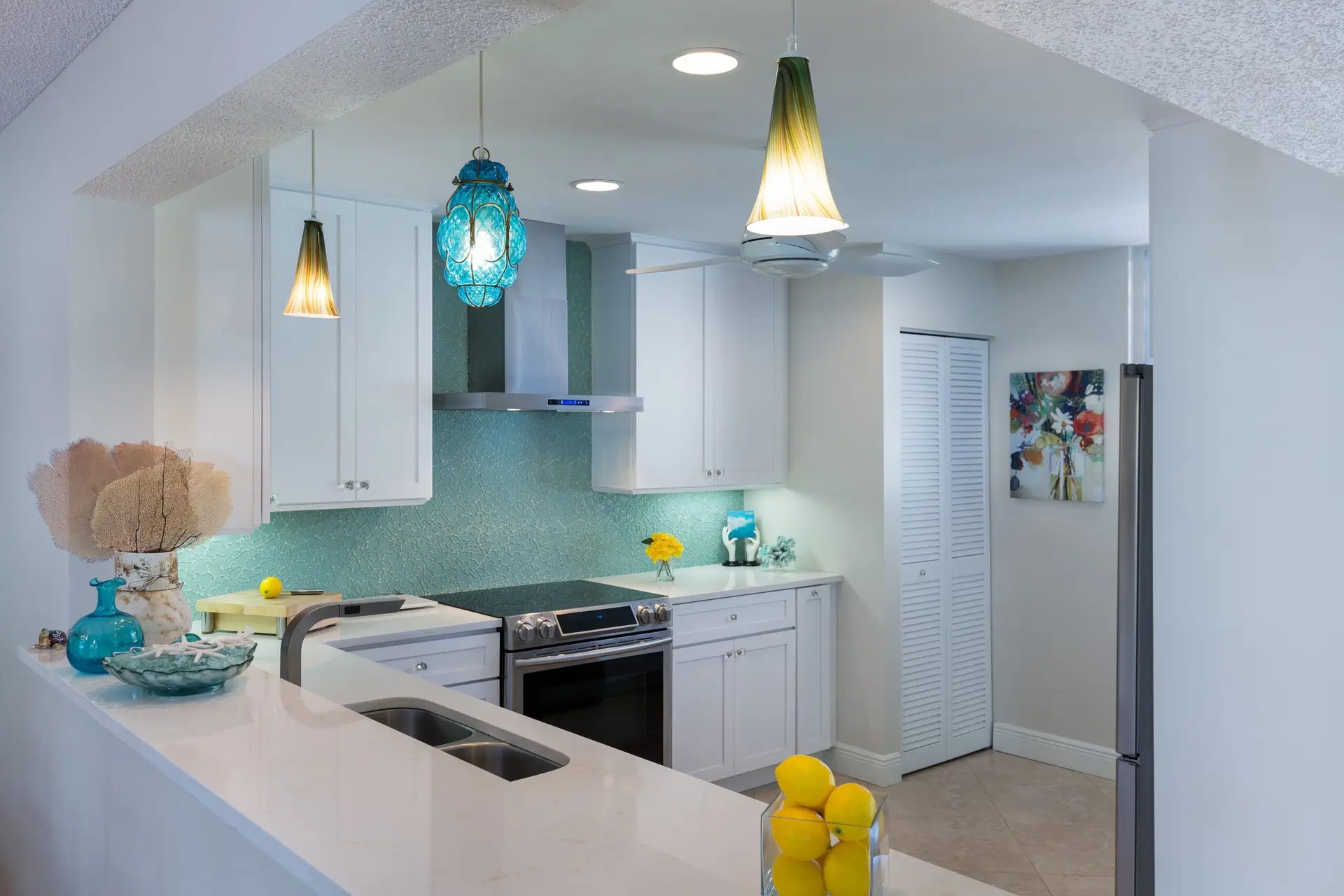
A replacement project example: This Greenfield Plantation kitchen remodel in Lakewood Ranch illustrates replacing a kitchen without redesigning the layout.
How Do I Build a Realistic Budget for My Kitchen Remodel?
Once you have a better idea of how much your kitchen really needs to change, the next question is almost always the same, “So, how much is this going to cost?”
It’s the question on everyone’s mind, and it’s also one of the hardest to answer honestly. At this point, I simply don’t know enough about your kitchen. I haven’t seen the space, and I don’t know how you prioritize your wish list. Anything I wrote here would be little more than an uneducated guess.
That doesn’t mean you can’t begin building a realistic budget. It simply means you need to approach it from a different direction.
How much does a kitchen remodel usually cost?
If you’ve spent any time searching online, you already know that the answers seem to be all over the place. One website says one number, and another says something completely different. The truth is, they could all be correct.
The problem isn’t the numbers. The problem is that a kitchen remodel isn’t a single commodity. A cosmetic refresh, a cabinet replacement, and a complete redesign are all kitchen remodels, but they each have completely different scopes and therefore completely different investment levels.
But there are some commonsense rules of thumb that would allow you to find a rough budget if you don’t mind doing a little math for yourself. If you’d like to explore examples of how to do that in more detail, How Much Does a Kitchen Remodel Cost? walks through several practical ways to begin estimating a budget that fits your own situation.
Why do remodeling costs vary so much?
Two finished kitchens can look similar in photographs and still have dramatically different costs. One home may need walls removed. Another may require electrical service upgrades or plumbing changes. One homeowner may be happy with stock cabinetry, while another wants every cabinet customized around the way they cook and live. Those decisions matter far more than the square footage of the room. That’s why you cannot think of remodeling as buying a single product.
Every project is really a collection of hundreds of individual decisions, and every one of those decisions affects the final investment.
If you’re curious about what actually drives those differences, Kitchen Remodel Costs Explained breaks down the biggest factors that influence remodeling costs.
How does the scope of my project affect the investment?
As we’ve already discussed, one of the biggest factors affecting cost is simply how much you’re asking the kitchen to do differently.
A refresh costs less because you’re changing some cosmetic finishes.
A simple replacement costs more because you’re replacing major components but keeping the room largely the same.
A remodel often requires redesigning the way the room functions, which can involve moving walls, relocating plumbing or electrical, or completely redesigning the space.
Generally speaking, the greater the change, the greater the investment tends to be.
Kitchen Remodel Cost by Scope compares these different project levels in more detail and can help you understand where your own project is likely to fall.
Is my budget realistic?
Money can be a touchy subject for a lot of people. Talking about budgets with someone who is going to be potentially spending your money can be even touchier. I certainly understand why people are reluctant to talk about the level of investment they are comfortable making before they get a kitchen remodeling quote. When I’m on the other side of this type of conversation, I’m no different. If I’m standing in someone’s kitchen and talking with them about their goals, after 30+ years, I can usually give a generalized ballpark estimate that’s realistic. But we aren’t standing in your kitchen right now.
Sometimes homeowners tell me the investment they’re comfortable making, and it’s very close to what’s needed to complete their wish list. More often, there’s a gap. That’s okay.
My job isn’t to convince you to spend more. It’s to help you understand what a level of investment can realistically accomplish.
When I put a design together, I usually begin with the entire wish list we’ve discussed. Then, whenever possible, I start breaking the investment down into individual decision options. That allows us to look at each feature and ask a simple question: Is this particular part of the improvement worth this particular investment to you?
That’s how we naturally find the balance between wish list and budget.
If you’re wondering whether a specific budget is realistic, Is $30,000 Enough for a Kitchen Remodel? explores exactly that question and explains which decisions impact your investment level most.
How should I think about remodeling as an investment?
A kitchen remodel isn’t just an expense. It’s also an investment in the way you live every day. Some decisions make financial sense because they improve your home’s value. Others make sense because they improve your quality of life every time you walk into the room. The right answer is usually a balance between those two.
If resale value is one of your top priorities, Can a Kitchen Remodel Boost Your Home’s Value? looks at how different remodeling decisions can balance both your enjoyment of your kitchen and the value of your home.
There isn’t a standard investment because there isn’t a standard kitchen remodeling project. The best remodeling decisions balance your goals, your lifestyle, your home, and the investment you’re comfortable making.
What's Next for My Kitchen Remodel?
I hope we’ve been able to answer some of the questions that brought you here. Maybe we even planted a few new ones you hadn’t thought about before. If that’s the case, then I’ve done what I set out to do.
Every successful kitchen remodel begins with understanding the decisions ahead. You don’t have to make every one of those decisions today, and you certainly don’t need to have all of the answers yet. In fact, most homeowners don’t at this stage, and that’s perfectly normal. My job is to give you the information necessary to make those decisions confidently.
My goal at this point isn’t to tell you exactly what your kitchen should look like or how much you should spend. It’s to help you better understand the problems you’re trying to solve, the choices you’ll need to make, and the trade-offs that come with each of those decisions.
So where do we go from here?
If you’d like to continue learning, we’ll next walk you through what it takes to make a kitchen remodeling project go smoothly. We’ll talk about planning, communication, scheduling, preparing your home, and how to avoid many of the frustrations that homeowners worry about before a project even begins.
If you’d rather talk specifics about your own kitchen, we’d be happy to have that conversation. Every kitchen remodeling project begins with questions, ideas, and a better understanding of what you’re hoping to accomplish. From there, we’ll work together to find the solution that’s right for your home, your lifestyle, and the investment you’re comfortable making.
Ready to talk about your own kitchen? Let’s start with a conversation.
If you’re still gathering ideas, I encourage you to continue reading the next section, How Do I Design a Kitchen That Truly Works for Me?
We’ll show you how to identify your priorities, make confident design decisions, and create a kitchen that supports the life you live, not just one that looks beautiful in photographs.
Because once you understand how to navigate a remodel successfully, the next question becomes making sure you’re building the right kitchen in the first place.